Adobe Livecycle Designer Trial Version
Posted By admin On 12/09/19- Adobe Livecycle Designer Download For Win…
- Adobe Livecycle Designer Trial Version
- Adobe Livecycle Designer Trial
- Acrobat Livecycle Designer Free
| Developer(s) | Adobe Systems |
|---|---|
| Stable release | |
| Operating system | Windows |
| Type | Form Designer |
| License | |
| Website | www.adobe.com/products/server/adobedesigner/ |
Feb 10, 2016 Download Adobe LiveCycle Designer. Create forms and documents with this comprehensive design tool that comprises advanced editing and layout adjustment capabilities. Adobe LiveCycle Designer ES4 11.0 is available as a free download on our software library. The most popular version of the tool 11.0. You can launch this PC program on Windows XP/Vista/7/8/10 32-bit. If you would like to try LiveCycle Designer 8, its now available as part of the Adobe Arobat 8 Professional trial. A stand alone version of LiveCycle Designer 8 is not available at the moment. LiveCycle Designer 7.1 continues to be available as a standalone trial. Adobe® LiveCycle® Enterprise Suite 4 is an enterprise document and form platform that helps you capture and process information, deliver personalized communications, and protect and track sensitive information. LiveCycle Designer is available as a standalone installer and is also bundled with LiveCycle WorkBench. To know more about installing Designer as part of Workbench, see Installing and running Workbench in this document. If you are using a standalone installer for Designer, follow these steps.
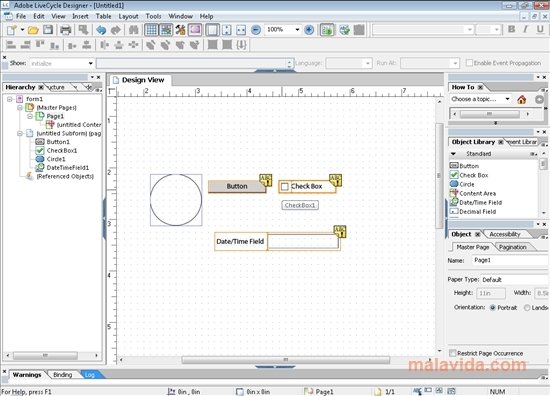
Adobe LiveCycle Designer is a forms authoring tool published by Adobe Systems, intended as a one-stop design tool to render XML forms as PDF or HTML files.
History[edit]
Adobe Livecycle Designer Download For Win…
Designer began as a component of PerForm, an Electronic forms software package created by Delrina. Delrina was bought by Symantec in 1995, which subsequently sold its Electronic Forms division to JetForm in 1996. JetForm (later renamed Accelio) was purchased by Adobe in 2002. Adobe ended the support of the Accelio version of the product in 2004.
In late 2003, Designer was redesigned and released as the Adobe Forms Designer.
In March 2004, Adobe shipped Adobe Designer 6.0 for use with Adobe's Intelligent Document Platform and with version 6 of the Adobe Acrobat software. This release included support for creating dynamic forms with data propagated by the Adobe Form Server, support for the XML Data Package (XDP) file format, as well as importing existing forms from Adobe Acrobat, Adobe Output Designer, Microsoft InfoPath and Microsoft Word.
In December 2004, Adobe released Designer as Adobe LiveCycle Designer 7.0 as part of the LiveCycle suite of products. This release added the ability to create dynamic forms that do not require the Adobe Form Server for dynamic features, tools for creating Email submissions, and the Paper Forms barcode tool. Designer 7.0 is bundled with Adobe Acrobat Professional 7.0 (on Microsoft Windows only) and available as a stand-alone product. In December 2005, Adobe released Adobe LiveCycle Designer 7.1 as a stand-alone upgrade. Acrobat 8 shipped in November 2006 bundled with a new version of LiveCycle Designer (version 8).
Racing Games: Step on the gas, and speed around the track in one of our many free, online racing games! Pick One of Our Free Racing Games, and Have Fun. Racing games are games where the objective is to win a race. Most of the games are races between cars, but you’ll find that you can race against other vehicles like motorcycles, monster trucks, bikes, and even potties! There are games where you can design your own vehicle and there are other games where you can race in a neon world. Free fun race car games. Racing Games. Play online racing games, car games, bike games, truck games and parking games. Car Racing Games: Drive exotic vehicles, supercars, and F1 speed machines in one of our many free, online car racing games! Pick One of Our Free Car Racing Games, and Have Fun.
LiveCycle Designer was included with Adobe Acrobat Pro Version 9. It is included in Adobe Acrobat X Pro as Adobe LiveCycle Designer ES2, but it is sold separately since Adobe Acrobat XI Pro. However, owners of a prior licensed version of Acrobat Professional who qualify for and purchase an upgrade to Adobe Acrobat XI Professional also qualify for a [http://helpx.adobe.com/x-productkb/policy-pricing/upgrade-livecycle-designer-acrobat-xi.html free upgrade to LiveCycle Designer ES4.
The core support for Adobe LiveCycle ES4 ended March 2018. Adobe suggests upgrading to Adobe Experience Manager Forms.[1]
Features[edit]
- Designer forms are structured documents with a hierarchical structure that can be converted into XML. This structure can include structure from XML Schema and example XML files.
- Designer forms can be saved as PDF files or XDP files. XDP files are used by the Adobe LiveCycle Form Server to render files to PDF or HTML as needed.
- PDF forms made in Designer can be designed to be dynamic (changing layout in response to data propagated from other sources), interactive (capable of accepting user input) or both. As of Designer 7.0, dynamic features of these PDF forms can be manipulated by the Adobe Form Server during the rendering process, or by the Adobe Acrobat/Acrobat Reader client during viewing.
- Designer allows JavaScript to be embedded into a form, allowing programmatic changes to the form layout as well as communication with various data sources (SOAP, OLEDB).
- Besides JavaScript, Designer includes a proprietary scripting language called FormCalc (in Adobe LiveCycle Designer ES2).
Limitations[edit]
- Designer works on a Windows only platform.
- Viewing PDF forms made with Designer requires Acrobat/Adobe Reader 6.0.2 or later.
- PDF forms made with Designer cannot be edited in Adobe Acrobat, only viewed.
- Some features of Designer forms are dependent on 'user rights' activated through the Adobe LiveCycle Reader Extensions server product. This applies to all PDFs, even ones created with Acrobat and other 3rd party vendors.
- Acrobat has been able to make forms since Acrobat 3.0, and there are some third party tools which can work with them in addition to Adobe software. However, these are a type of form now called acroforms. Forms created by Designer are an incompatible type (commonly XFA forms) and are not in general compatible with existing non-Adobe software. Owners of Acrobat 7.0 Professional have the choice of making acroforms directly, or using the bundled (on Windows) copy of Designer to create XFA forms.
- When a form object is bound to an xmlnode, the value from that node may only be extracted once. If several objects share the same binding, only the first object will receive the node value when the form is processed.
- There are limitations in the ability of Designer to parse HTML and display it in a form; Designer cannot handle a number of fundamental tags, including ordered list, unordered list and tables. (see https://web.archive.org/web/20150706161930/http://partners.adobe.com/public/developer/en/xml/xfa_spec_2_8.pdf page 1081 for supported tags)[citation needed]
- The program has had a constant issue with users being able to set the tabbing order correctly. The system often reorders the entire form causing the user to have to start over. This problem has never been corrected but can be reduced by the user ensuring every field has a unique name (i.e. Yes/No Radio 1, Yes/No Radio 2, etc.).[2]
- While Livecycle Designer may be the best tool available for Windows users to build dynamic pdf forms, it is known to have a lot of bugs and Adobe does not give it the level of support that it does other applications. Due to this, it does require a learning curve to both reduce and effectively handle the different bugs.[3]
References[edit]
- ^https://blogs.adobe.com/livecycle/2015/09/five-reasons-to-upgrade-from-livecycle-to-experience-manager-forms.html
- ^https://acrobatusers.com/forum/forms-livecycle-designer/tab-sequence-will-not-order-correctly/
- ^http://forms.stefcameron.com/bug-list/
External links[edit]
- Enhanced Adobe XML Architecture Supports XML/PDF Form Designer and XML Data Package (XDP), Cover Pages, July 15. 2003
| Developer(s) | Adobe Systems |
|---|---|
| Stable release | |
| Operating system | Windows |
| Type | Form Designer |
| License | |
| Website | www.adobe.com/products/server/adobedesigner/ |
Adobe LiveCycle Designer is a forms authoring tool published by Adobe Systems, intended as a one-stop design tool to render XML forms as PDF or HTML files.
History[edit]
Designer began as a component of PerForm, an Electronic forms software package created by Delrina. Delrina was bought by Symantec in 1995, which subsequently sold its Electronic Forms division to JetForm in 1996. JetForm (later renamed Accelio) was purchased by Adobe in 2002. Adobe ended the support of the Accelio version of the product in 2004.
In late 2003, Designer was redesigned and released as the Adobe Forms Designer.
In March 2004, Adobe shipped Adobe Designer 6.0 for use with Adobe's Intelligent Document Platform and with version 6 of the Adobe Acrobat software. This release included support for creating dynamic forms with data propagated by the Adobe Form Server, support for the XML Data Package (XDP) file format, as well as importing existing forms from Adobe Acrobat, Adobe Output Designer, Microsoft InfoPath and Microsoft Word.
Adobe Livecycle Designer Trial Version
In December 2004, Adobe released Designer as Adobe LiveCycle Designer 7.0 as part of the LiveCycle suite of products. This release added the ability to create dynamic forms that do not require the Adobe Form Server for dynamic features, tools for creating Email submissions, and the Paper Forms barcode tool. Designer 7.0 is bundled with Adobe Acrobat Professional 7.0 (on Microsoft Windows only) and available as a stand-alone product. In December 2005, Adobe released Adobe LiveCycle Designer 7.1 as a stand-alone upgrade. Acrobat 8 shipped in November 2006 bundled with a new version of LiveCycle Designer (version 8).
LiveCycle Designer was included with Adobe Acrobat Pro Version 9. It is included in Adobe Acrobat X Pro as Adobe LiveCycle Designer ES2, but it is sold separately since Adobe Acrobat XI Pro. However, owners of a prior licensed version of Acrobat Professional who qualify for and purchase an upgrade to Adobe Acrobat XI Professional also qualify for a [http://helpx.adobe.com/x-productkb/policy-pricing/upgrade-livecycle-designer-acrobat-xi.html free upgrade to LiveCycle Designer ES4.
The core support for Adobe LiveCycle ES4 ended March 2018. Adobe suggests upgrading to Adobe Experience Manager Forms.[1]
Features[edit]
Adobe Livecycle Designer Trial
- Designer forms are structured documents with a hierarchical structure that can be converted into XML. This structure can include structure from XML Schema and example XML files.
- Designer forms can be saved as PDF files or XDP files. XDP files are used by the Adobe LiveCycle Form Server to render files to PDF or HTML as needed.
- PDF forms made in Designer can be designed to be dynamic (changing layout in response to data propagated from other sources), interactive (capable of accepting user input) or both. As of Designer 7.0, dynamic features of these PDF forms can be manipulated by the Adobe Form Server during the rendering process, or by the Adobe Acrobat/Acrobat Reader client during viewing.
- Designer allows JavaScript to be embedded into a form, allowing programmatic changes to the form layout as well as communication with various data sources (SOAP, OLEDB).
- Besides JavaScript, Designer includes a proprietary scripting language called FormCalc (in Adobe LiveCycle Designer ES2).
Limitations[edit]
- Designer works on a Windows only platform.
- Viewing PDF forms made with Designer requires Acrobat/Adobe Reader 6.0.2 or later.
- PDF forms made with Designer cannot be edited in Adobe Acrobat, only viewed.
- Some features of Designer forms are dependent on 'user rights' activated through the Adobe LiveCycle Reader Extensions server product. This applies to all PDFs, even ones created with Acrobat and other 3rd party vendors.
- Acrobat has been able to make forms since Acrobat 3.0, and there are some third party tools which can work with them in addition to Adobe software. However, these are a type of form now called acroforms. Forms created by Designer are an incompatible type (commonly XFA forms) and are not in general compatible with existing non-Adobe software. Owners of Acrobat 7.0 Professional have the choice of making acroforms directly, or using the bundled (on Windows) copy of Designer to create XFA forms.
- When a form object is bound to an xmlnode, the value from that node may only be extracted once. If several objects share the same binding, only the first object will receive the node value when the form is processed.
- There are limitations in the ability of Designer to parse HTML and display it in a form; Designer cannot handle a number of fundamental tags, including ordered list, unordered list and tables. (see https://web.archive.org/web/20150706161930/http://partners.adobe.com/public/developer/en/xml/xfa_spec_2_8.pdf page 1081 for supported tags)[citation needed]
- The program has had a constant issue with users being able to set the tabbing order correctly. The system often reorders the entire form causing the user to have to start over. This problem has never been corrected but can be reduced by the user ensuring every field has a unique name (i.e. Yes/No Radio 1, Yes/No Radio 2, etc.).[2]
- While Livecycle Designer may be the best tool available for Windows users to build dynamic pdf forms, it is known to have a lot of bugs and Adobe does not give it the level of support that it does other applications. Due to this, it does require a learning curve to both reduce and effectively handle the different bugs.[3]
References[edit]

- ^https://blogs.adobe.com/livecycle/2015/09/five-reasons-to-upgrade-from-livecycle-to-experience-manager-forms.html
- ^https://acrobatusers.com/forum/forms-livecycle-designer/tab-sequence-will-not-order-correctly/
- ^http://forms.stefcameron.com/bug-list/
External links[edit]
- Enhanced Adobe XML Architecture Supports XML/PDF Form Designer and XML Data Package (XDP), Cover Pages, July 15. 2003